
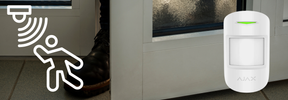
What are motion detectors and how do they work?
, by ASE, 7 min read
, by ASE, 7 min read
Motion detectors, also called motion detectors, can be seen everywhere these days. They are used in homes, businesses and public spaces. Their main function is to detect motion, which can be used for security purposes or to save energy by controlling lighting. But how exactly do they work? What types are available and how do you choose the right one?
Motion detectors, also called motion detectors, can be seen everywhere these days. They are used in homes, businesses and public spaces. Their main function is to detect motion, which can be used for security purposes or to save energy by controlling lighting.
But how exactly do they work? What types are available and how do you choose the right one?
Motion detectors are devices that detect physical movement in a specific area. They are an essential part of many security systems.
These devices work by emitting a signal - this can be light, ultrasound or radio waves. When this signal is interrupted by movement, the sensor detects the change and triggers a response. This response may include turning on a light, activating an alarm or sending a notification to a security system. How the motion detector responds depends on how it is set and what it is connected to.
There are different types of motion detectors, each with unique features and applications.
The most common types are:
Each type of motion detector has its strengths and weaknesses. For example, PIR sensors are cost-effective and reliable, but can be prone to false alarms from pets. Understanding the different types of motion detectors can help you choose the right one for your needs.
Motion detectors offer numerous advantages, especially in terms of safety and energy efficiency.
For security, they can detect unauthorized movements on your property. This can trigger an alarm or notification, deterring potential intruders.
In terms of energy efficiency, motion detectors can control lighting based on occupancy. Lights can automatically turn off when no motion is detected, saving energy. These benefits make motion detectors a valuable addition to any home or business.
Motion detectors for indoors and outdoors have different characteristics.
Indoor motion detectors are often designed for smaller spaces and can be used to turn on lights or activate an alarm when motion occurs.
Outdoor motion detectors are usually more robust, designed to withstand the elements and have a greater detection range. Choosing the right motion detector depends on the specific needs and the environment in which it is placed.
Installing a motion detector can be a simple task, but it depends on the type of sensor and the specific installation requirements.
Some motion detectors can easily be connected to an existing lighting system, while others may require a more complex installation. Important installation considerations include:
Always follow the manufacturer's instructions carefully and, if in doubt, consult a professional.
The placement of motion detectors is crucial for their effectiveness. They should be placed so that they cover a wide area. Height is also an important factor; Motion detectors are usually placed at a height of 2 to 2.5 meters. Avoid placing it near heat sources or air conditioners, as these may unnecessarily activate the sensor. Make sure the sensor is not blocked by furniture or other objects so as not to limit the detection range.
The detectors play an important role in smart home systems. They can be integrated with other devices for automation. For example, a motion detector can turn on a light when someone enters a room, adding to both convenience and energy efficiency. They can also activate an alarm in case of unwanted movements, which increases the security of the home.
Motion detectors require regular maintenance to function optimally. This includes cleaning the sensor to remove dirt and dust. Also check the batteries regularly and replace them if necessary, as a weak battery can affect the performance of the sensor. If you have problems with the motion detector, you can follow the following steps:
If problems persist, consult the manufacturer or a professional.
Choosing the right motion detector is crucial for the effectiveness of your security system. It can make the difference between an effective security system and one that causes false alarms. When choosing a motion detector, you should consider factors such as location, sensor type, sensitivity and range. It is also important to consider how the motion detector fits into your existing system to create a seamless and effective security solution. In short, careful selection and installation of motion detectors can contribute to a safer and more energy-efficient home or business.
How do motion detectors detect movement and what triggers the alarm?
Motion detectors work by emitting a signal (such as infrared, ultrasound or radio waves) and detecting changes in the signal when an object moves in the detected area. This change triggers the alarm or another programmed response, such as turning on lights or sending a notification to a security system.
How can I ensure that my motion detector is not activated unnecessarily?
To avoid false alarms, follow these tips:
Is it possible to install a motion detector myself, or do I need a professional?
Many motion detectors are designed for easy DIY installation and come with clear instructions. For more complex systems, or if you are unsure of your technical skills, it may be useful to call in a professional to ensure the sensor is installed correctly and safely.
Is it possible to link motion detectors to other smart devices in my home?
Yes, modern motion detectors can often be integrated with smart home systems. For example, they can work together with smart lighting, security cameras and alarm systems. This provides extra convenience and security, such as automatically turning on lights when motion is detected or sending notifications to your smartphone.
If you want to be sure that you make the right choice for your specific situation, please contact us without obligation. Our experts have more than 20 years of experience and are happy to help you.